

Eye Movement Desensitisation and Reprocessing Therapy
-
✽
Eye Movement Desensitisation and Reprocessing (EMDR) therapy uses guided eye movements to stimulate both sides of the brain, helping to "tax" its working memory while processing and resolving traumatic memories. This approach is based on the idea that bilateral stimulation can reduce the emotional intensity of distressing memories.
-
✽
Bilateral stimulation in EMDR doesn’t rely solely on eye movements; it can also involve auditory cues or gentle tactile taps on both sides of the body. These forms of stimulation work to engage both hemispheres of the brain, promoting emotional processing and memory integration.
-
✽
EMDR therapy follows an eight-phase process: history-taking, stabilisation, assessment, desensitisation, installation, body scan, closure, and reevaluation. These phases guide the therapy journey, ensuring clients feel safe and supported as they address their concerns. Professional help with EMDR is tailored to meet individual needs at every stage.
-
✽
EMDR is effective for a range of presenting concerns, including post-traumatic stress disorder (PTSD), anxiety, phobias, and grief. It can also help with self-esteem issues, chronic pain, and other trauma-related conditions.
-
✽
For those seeking to heal from trauma, EMDR offers a structured and effective therapeutic plan. Effective, both in-person and online, the manualised approach tailors itself to be implemented over both mediums.
-
✽
The goal is not to erase your memories, but to help them feel less distressing so they no longer have the same impact on your present life.

Comprehensive

Therapeutic

Handouts
Helping You to Navigate the EMDR Journey

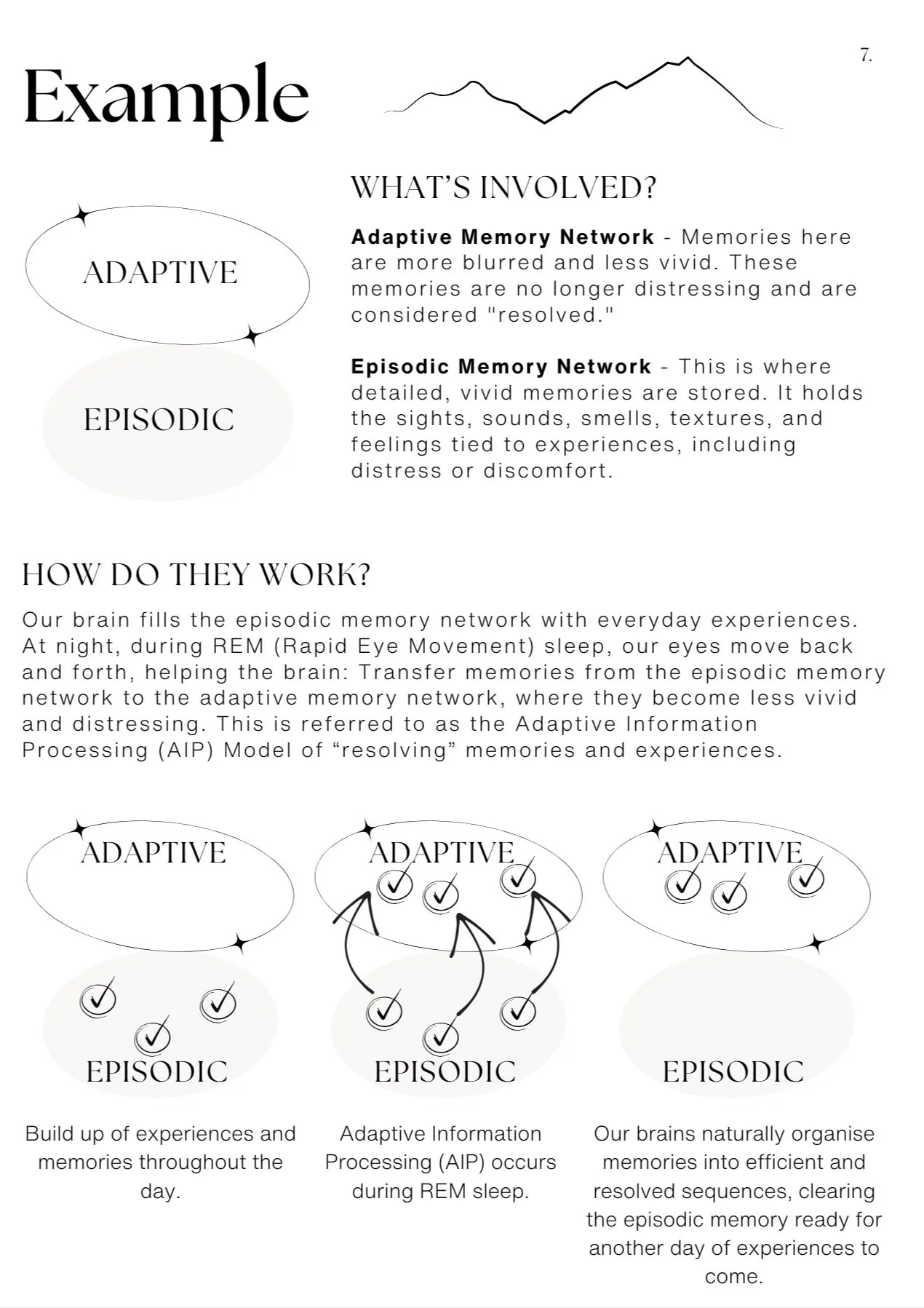
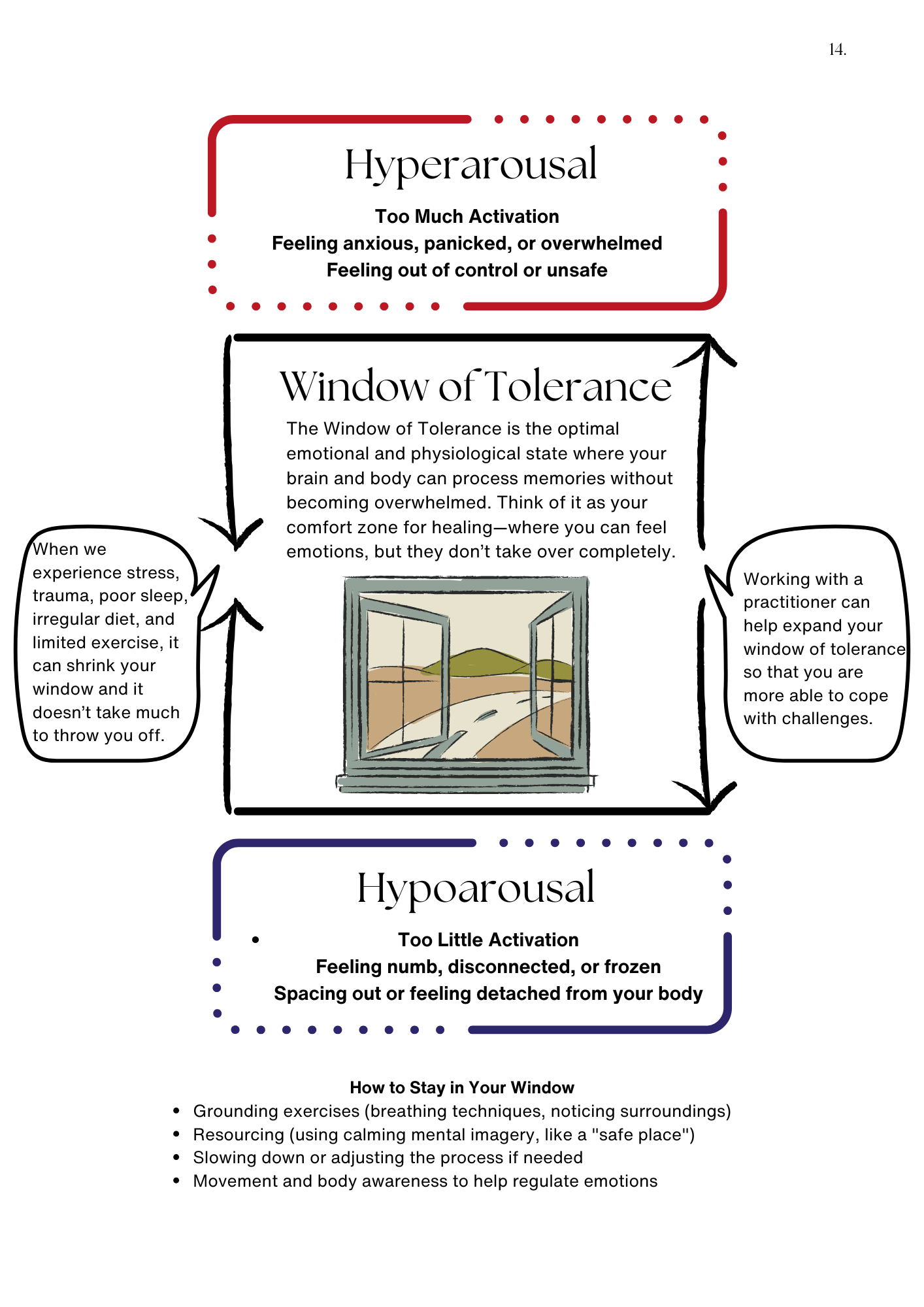
Worked examples and psychoeducation handouts
Stabilisation handouts
A Comprehensive Guide for Clients and Clinicians
EMDR therapy is a transformative approach that helps individuals process distressing memories and reduce hyper-arousal. However, navigating the 8-phase process can feel overwhelming at times. A New Venture: EMDR Booklet for Clients and Clinicians is designed to support the client in becoming an active participant in their EMDR journey. By providing clear explanations, structured exercises, and practical tools to enhance the EMDR experience, you will feel safe and well-equipped to reprocess distressing. memories. You will be provided with one of these to track your progress and to refer to throughout treatment.
What’s Inside?
✔ Step-by-Step Breakdown of the 8 Phases
✔ Practical Stabilisation Exercises
✔ Memory Identification & Reprocessing Tools
✔ Common Questions & Misconceptions
✔ Additional Resources & Support
Frequently Asked Questions
-
No. EMDR (Eye Movement Desensitisation and Reprocessing) does not erase memories or make you forget what happened. Instead, EMDR therapy aims to reduce the emotional distress, physical reactions and unhelpful beliefs associated with difficult or traumatic memories, so they feel less overwhelming.
-
EMDR therapy is best known for treating PTSD and trauma, but it can also be helpful for anxiety, phobias, panic, grief, disturbing experiences and other issues connected to distressing memories. Your psychologist can help determine whether EMDR is appropriate for your individual circumstances.
-
The number of EMDR therapy sessions varies depending on your circumstances, the complexity of what you're experiencing and your treatment goals. Some people notice changes within a few sessions, while others benefit from a longer course of therapy. Your psychologist will work with you to develop an appropriate treatment plan.
-
Not necessarily. EMDR does involve recalling aspects of a distressing experience, but you don't need to describe every detail or tell your story repeatedly. EMDR is structured to help you process difficult memories while maintaining a sense of safety and control throughout therapy.
-
EMDR therapy differs from many traditional talking therapies because it focuses on helping the brain process distressing memories and experiences, rather than requiring you to extensively discuss or analyse them. EMDR uses bilateral stimulation, such as guided eye movements or tapping, as part of the reprocessing process. It can be particularly helpful for people who feel that talking about their experiences alone hasn't been enough.